Monty Tiberius Beauregard-Hayes traded the tight confines of Fort Lauderdale for the infinite, unnerving straightness of Alligator Alley. The call came from the Florida Highway Patrol: drivers were reporting phantom headlights, vehicles that materialized out of the blackness, sped towards them, and vanished without a trace, causing multiple near-misses along the desolate 80-mile stretch of I-75 that bisects the Everglades.
Monty set up his mobile lab in a discreet pull-off near the center of the Alley. The road itself is an anomaly: an unrelenting, ruler-straight scar across a primal landscape. This linearity, Monty suspected, was the key.
He didn’t wait long. Around 2:00 AM, the air grew thick with a low, resonant hum his ears couldn’t quite register, but his Chronometer Field Detector screamed. Then, out of the inky darkness, two pinpricks of light appeared. They resolved into the distinct, yellowish glow of old-model headlights—not the crisp white LED of modern cars—belonging to a phantom vehicle moving at an impossible speed. It zipped past him and vanished completely just a few hundred yards later, leaving no dust, no sound, and no thermal signature.
“Not a ghost, not a spirit,” Monty muttered, checking his data. “The energy signature is purely kinetic and temporal, not psycho-kinetic.”
Monty spent the next two nights tracking and analyzing the phenomenon. His theory solidified: the unique geometry of Alligator Alley, a fixed, unchanging vector in spacetime, combined with the colossal, cumulative kinetic energy of millions of vehicles traveling the same exact line for decades, had created a localized “Temporal Echo”.
The road itself, like a giant magnetic tape, was recording and occasionally replaying the energy of the past. The phantom lights weren’t spirits of the dead; they were the ghosts of old momentum.
He identified the models of the phantom cars from the frequency of their headlights: old Ford trucks, Buicks, and transport trailers from the 1980s and 90s, the era when the road was still relatively new and drivers were pushing limits. He even captured an image showing a flickering, spectral reflection of a large, antiquated yellow “Toll Ticket Required” sign where a modern toll plaza now stood.
The drivers were being terrorized by brief, visual bleed-throughs from a more energetic past, fleeting images of high-speed vehicles that were no longer physically present.
Monty knew he couldn’t stop the temporal physics of a major interstate. The Alley was too long, too straight, and too energetic to “ground.” His solution had to be simple and physical.
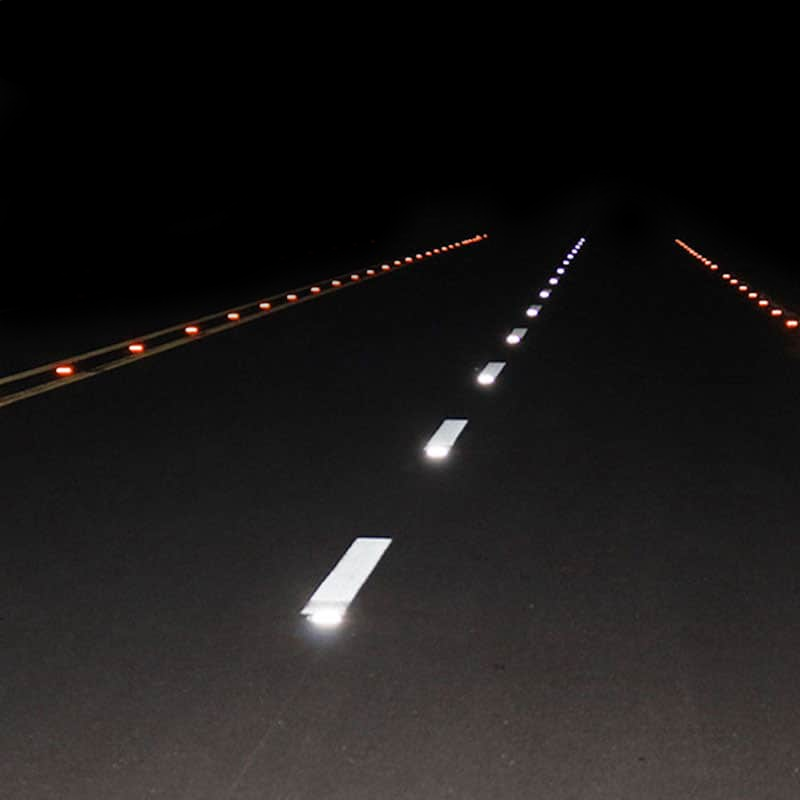
He presented his findings (omitting the “temporal echo” part in favor of “unusual atmospheric refraction”) to the Highway Patrol. His recommendation was to install highly reflective, raised pavement markers every ten feet along the entire length of the highway.
“The new markers will introduce millions of fixed, bright, physical objects to the drivers’ immediate present,” Monty explained. “The sheer volume of new, distinct, current-day visual data will overwhelm the weak, flickering visual anomaly of the past. It will anchor the drivers’ perception firmly in the now.”
The Patrol, skeptical but desperate to stop the accidents, implemented the plan. Within a month, the reports of phantom lights ceased. The temporal echoes of Alligator Alley were still happening, but the present was now bright enough to effectively silence the ghosts of the highway’s past. Monty drove the length of the Alley one last time, seeing only the sharp, blinding flash of the new markers—a triumph of simple reflective plastic over the complex laws of spacetime.