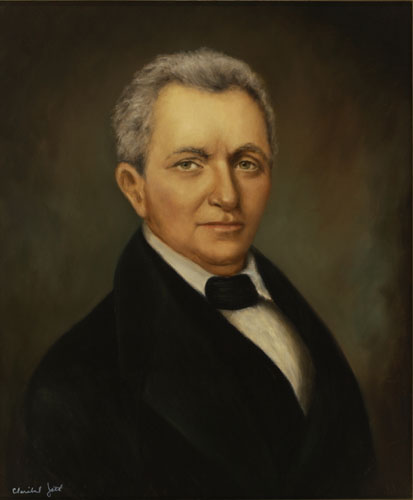
The humid grip of South Florida often felt like a warm blanket to Monty Tiberius Beauregard-Hayes, but the air in Jacksonville had a different feel – a briny tang mixed with the scent of pine, hinting at both industry and deeper, older secrets. He’d traveled north, drawn by a tip from a surprisingly lucid caller on “Monty’s Mysteries of the Mangrove” hotline. The caller claimed to have seen the ghost of William Pope Duval, Florida’s first territorial governor, loitering suspiciously around the city’s bustling docks.
Monty initially dismissed it as local lore, a historical figure’s spirit simply clinging to his old haunts. Duval was known for his colorful character, his love of good company, and certainly not for any posthumous criminal enterprises. However, the caller’s insistence, coupled with recent murmurs of a spike in stone crab smuggling out of Jacksonville’s port, pinged Monty’s finely tuned paranormal radar. Could Florida’s spectral history be getting tangled up in its illicit present?
He spent his first few days doing groundwork, haunting the historic districts, lurking near waterfront bars, and chatting up grizzled fishermen who looked like they’d seen it all (and probably had). The tales of Duval’s ghost were plentiful – a shadowy figure in period clothing, sometimes seen smoking a spectral cigar, often near the older warehouses down by the St. Johns River. But the link to stone crabs was where the stories got strange. Whispers suggested that when the ghost appeared, a particular dock or warehouse would suddenly become unusually active, even at odd hours, with crates moving under the cloak of darkness.
One night, staking out a decrepit pier rumored to be a favored haunt of both Duval’s ghost and the crab smugglers, Monty saw him. A shimmering, translucent figure, unmistakably 19th-century in attire, stood by a stack of crates marked “Fresh Produce.” The ghost of Governor Duval, his form flickering like heat haze, gestured dismissively at the crates, then seemed to shudder before fading into the night. Moments later, a beat-up truck backed up to the pier, and two burly men began loading the “produce” — crates that clearly bore the distinct thrum and chill of live stone crabs, their claws bound.
Monty snapped photos, careful to stay hidden. This wasn’t just a ghost; this was a ghost inexplicably connected to a crime. He even thought, for a fleeting moment, that he saw the subtle, indistinct silhouette of Marco Crossity observing from the shadows across the water, a silent guardian or perhaps an interested party in this peculiar spectral-smuggling partnership.
The mystery deepened when Monty later managed to talk to an elderly dock worker, a man whose family had been in Jacksonville for generations. He spoke of “the Governor’s curse” on any illicit activity passing through his old stomping grounds. “He don’t like no funny business,” the old man rasped, “especially not when it involves his beloved state’s bounty.” Could Duval’s ghost be trying to stop the smuggling? Or was he somehow, inadvertently, being used or manipulated by the smugglers themselves, his spectral presence creating a diversion or even a kind of supernatural “cover”?
The idea of Governor Duval, a man of such historical significance, somehow tangled in a criminal enterprise, even as a ghost, was too outlandish to ignore. Monty had to find out if the Governor was an unwitting participant, a reluctant witness, or perhaps even a spectral enforcer in this bizarre stone crab saga. The truth, Monty suspected, was far slipperier than any crab claw and as elusive as a whispered secret from beyond the grave.