Back on the mainland, Monty Tiberius Beauregard-Hayes traded the salt spray of Key West for the sticky heat and pervasive sweetness of Central Florida’s citrus country. He had received a frantic call from Mrs. Elara “Ellie” Mae Higgins, the matriarch of a family that had tended the same hundred-acre orange grove for three generations.
“It’s not blight, Mr. Beauregard-Hayes,” Ellie Mae insisted over the phone, her voice tight with a grief that went beyond mere crop failure. “We’ve seen citrus canker, we’ve seen HLB… this is different. The trees aren’t just dying; they’re grieving.”
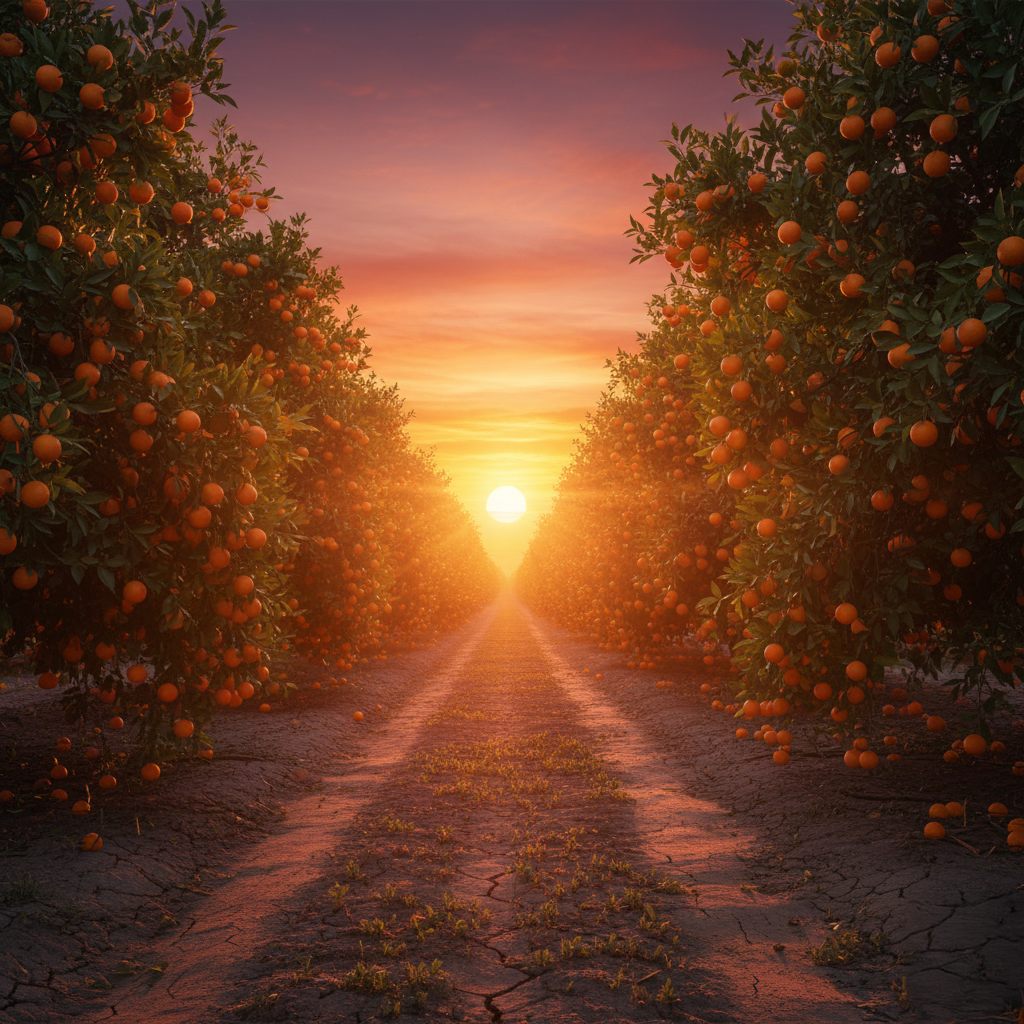
Monty arrived at the Higgins Grove to find a haunting scene. Row upon endless row of orange trees stood silent and skeletal, their leaves turning a pale, sickly yellow before falling away altogether. The few remaining oranges were small, dry, and tasted of ash. But it was the silence that struck Monty. Normally, a healthy grove hummed with the sound of bees, birds, and insects. This one was unnaturally quiet, a vast, sun-drenched tomb.
Ellie Mae led him through the sickest part of the grove. “The soil tests are fine. The water’s fine. State agriculture specialists are baffled. But I swear, Monty, when the sun goes down, you can hear them. A low, sad whisper, like wind chimes played by a slow, dying breath.”
Monty pulled out his customized sound equipment, designed to capture frequencies beyond the human range. He recorded the area for hours, finding nothing but ambient noise. But his EMF sensor was reacting wildly, spiking and dipping with chaotic, non-natural energy patterns. This wasn’t a biological problem; it was an energetic one.
Digging into local lore, Monty discovered the grove sat on land once sacred to an ancient, unnamed indigenous tribe, a place they called the “Orchard of Voices.” The tribe believed the land itself was a repository of memory and spirit, and that the trees acted as conduits, absorbing and reflecting the emotions of the people who worked the soil.
Monty theorized that something—a burst of powerful, negative emotion, perhaps a massive displacement of spirit—was being absorbed by the trees, sickening them from the inside out. They were essentially dying from a massive, energetic overdose of pure, concentrated sorrow. The trees were manifesting the grief of the land itself.
His theory was confirmed when he found a single, small orange tree that was inexplicably thriving in the middle of the desolation. It was an anomaly, a beacon of life in the dying orchard. As he examined it, he noticed a tiny, almost imperceptible charm woven into its lower branches: a simple knot of dried grass and brightly colored yarn. It was a charm of protection, or perhaps, remembrance.
He showed the charm to Ellie Mae, who burst into tears. “My grandmother,” she whispered. “She was the first Higgins here. She always used to tie those when she was a girl. Said it was what her old Seminole caretaker taught her. A little gift to the tree, so it wouldn’t forget the good times.”
The dying trees were filled with the silent screams of forgotten history, displacement, and accumulated sorrow. But the surviving tree held a charm of remembrance, a tiny seed of positive, intentional memory that protected it from the Grove’s collective grief.
The task was clear: Monty couldn’t treat a disease; he had to heal a trauma. He had to find a way to honor the land’s sorrow and soothe the “Orchard of Voices” before the blight of grief claimed the grove entirely.