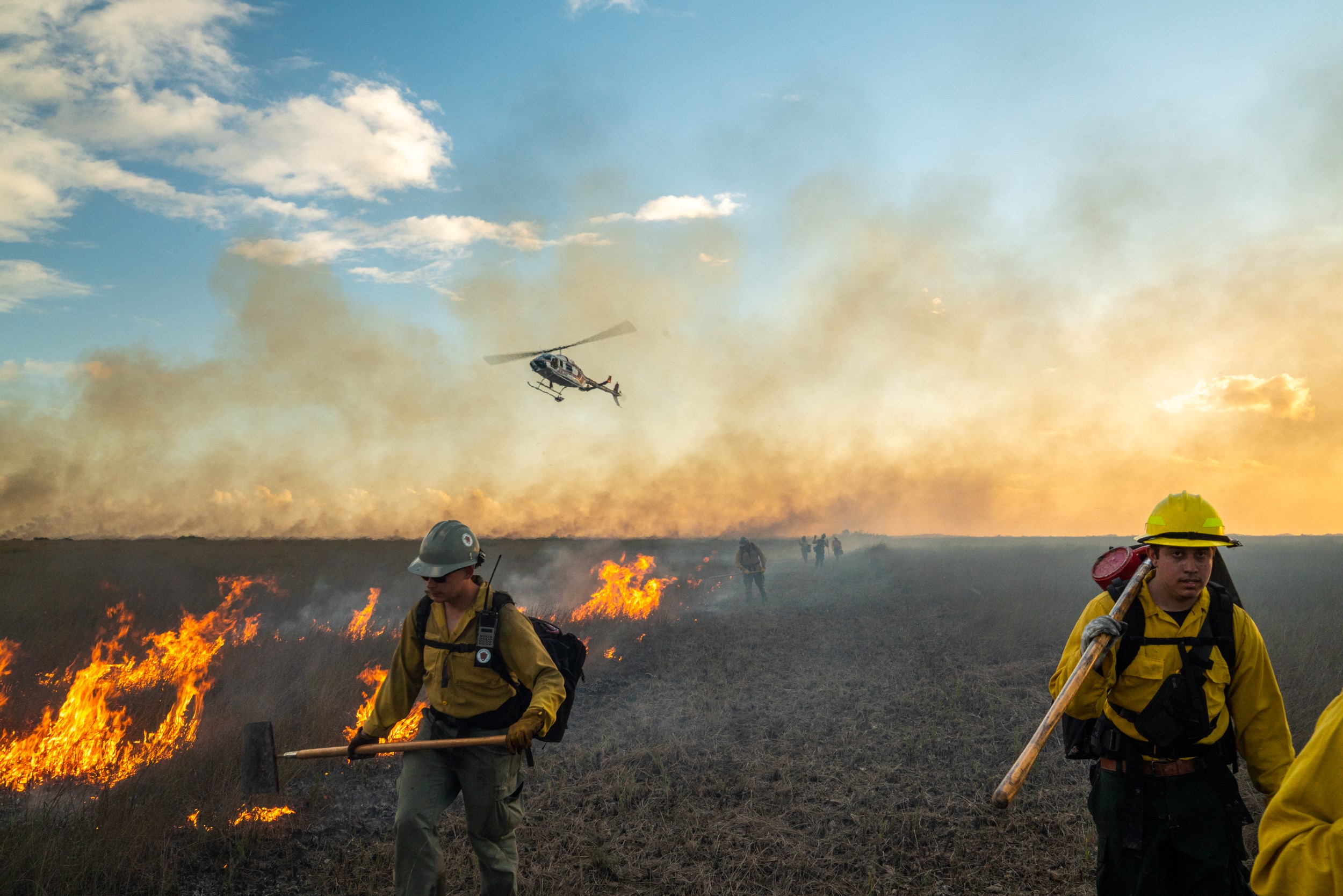
The next morning found Monty and Diane back in the Fakahatchee, but they were no longer simply field researchers; they were investigators. The burned arc Diane had created with her Drip Torch was a perfect, sooty line through the undergrowth, a clear marker in the chaos.
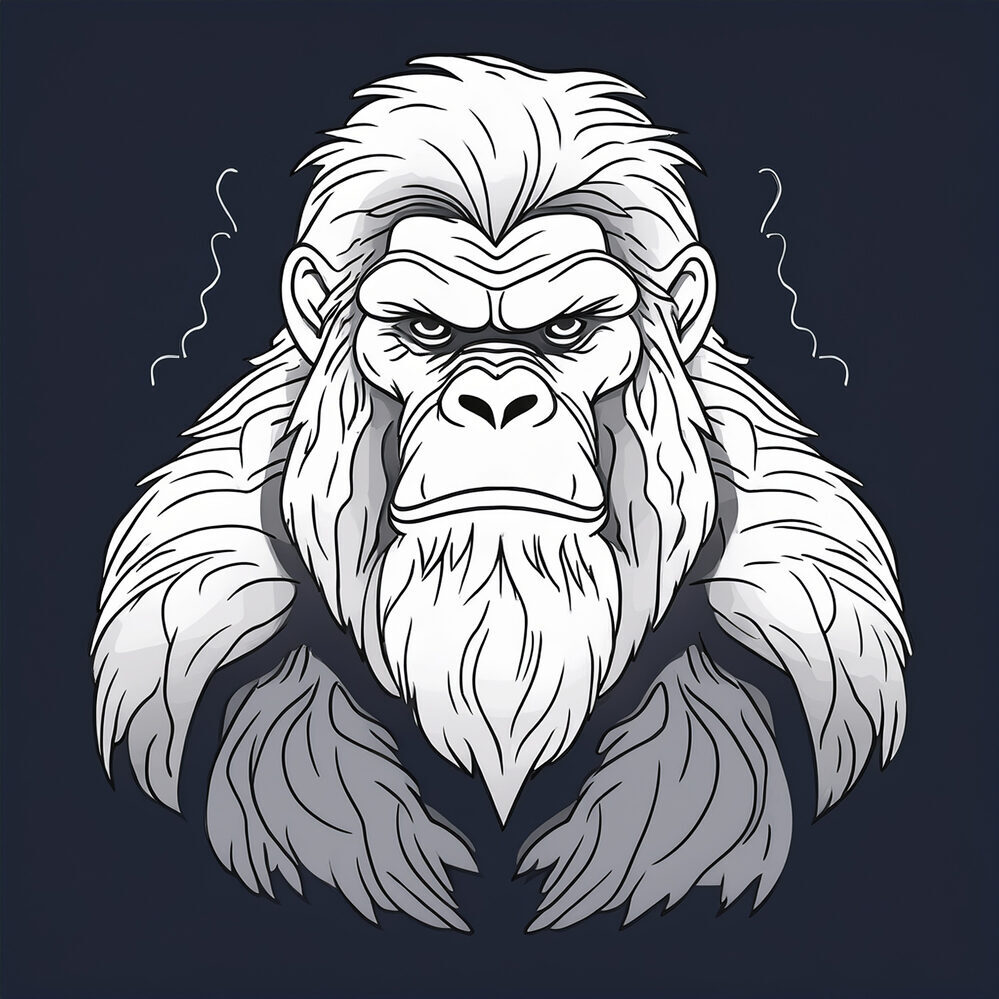
“The cultists left in a hurry,” Diane observed, pointing to a dropped satchel containing peculiar, dried fungi and a half-burnt grimoire page. “But the Skunk Ape… it wasn’t panicked. It was focused.”
Monty was measuring the depth of the creature’s prints. “They’re deeper here, right at the altar, than anywhere else. It wasn’t just near the ritual; it was targeting it.” He bent down and picked up a piece of the charred cypress knee that had served as the altar. It was covered in a residue that smelled intensely of sulfur and decay, but underneath, Monty detected a different, stronger odor.
“The stench,” he murmured, pulling out a small evidence bag. “The Skunk Ape’s signature odor. You said it was worse than anything you’d ever smelled, and I agree. But this residue… it’s been mixed with the sulfur and the burning herbs from the ritual. It was applied after the fire, not before.”
“Applied?” Diane raised an eyebrow. “Like it was actively trying to cover up the residue of the ritual?”
Monty flipped open his notebook to a section on local folklore. “Yes! The local legend states that the creature’s odor is used to ward off ‘malevolent things that cling to the earth.’ It’s not just a defense mechanism; it’s a cleansing agent.”
He walked over to where the Skunk Ape had first emerged, near the deepest part of the swamp. “Think back, Diane. They were summoning Foras, a demon associated with the knowledge of powerful herbs and the finding of ‘treasures.’ The Fakahatchee Strand is a treasure trove of rare, unique flora. Foras wouldn’t have just demanded a soul; he would have corrupted the ecosystem to gain power, demanding sacrifices of the very plants the mangrove protects.”
Diane leaned against a mossy cypress, the pieces clicking into place. “And the Skunk Ape—this indigenous protector—would have instinctively known that. The ritual wasn’t an attraction for the beast; it was a threat to its domain.”
“Exactly,” Monty confirmed, his voice hushed with realization. “When the ritual climaxed, and the energy of the conjuring tried to ‘bind’ the demon to the land, the Skunk Ape intervened. It didn’t just stumble onto the scene—it was there to stop the summoning.”
Diane recalled the creature’s piercing shriek and its laser-like focus on the altar. “It went after the point of power, the gateway. We weren’t its enemies, Monty. We were in its way.”
“And when you deployed the fire?” Monty pointed to the Drip Torch hanging from her belt. “The creature hesitated. It was a controlled, tactical fire—a force of nature being used responsibly. In that moment, it must have recognized you as a wielder of a cleansing, balancing force, not an agent of chaos like the cultists trying to use dark power.”
Diane took a deep breath of the swamp air, a sudden wave of respect washing over her. “So, when we thought we were fighting for our lives against a cryptid, we were actually witnessing the Everglades’ first line of defense against an occult intrusion. The Skunk Ape was the good guy all along.”
Monty carefully sealed his evidence bag. “It completely derailed their ceremony, driving them off and neutralizing the site with its own primal methods. We didn’t save the Fakahatchee that night, Diane. The Skunk Ape did.”
Diane looked out over the vast, ancient wilderness, now feeling a profound shift in her perspective. The mangrove was a living system, complete with its own mysterious, hairy guardian who protected it from things far more dangerous than wildfire.
“Next time we’re out here,” Diane said, clipping her Drip Torch securely. “If we smell that stench, we’re backing away and letting the professional handle it.”
Monty grinned, already adding a new category to his field notes: Cooperative Cryptid Ecology. “I’ll make sure to bring a peace offering of rare berries, just in case.”