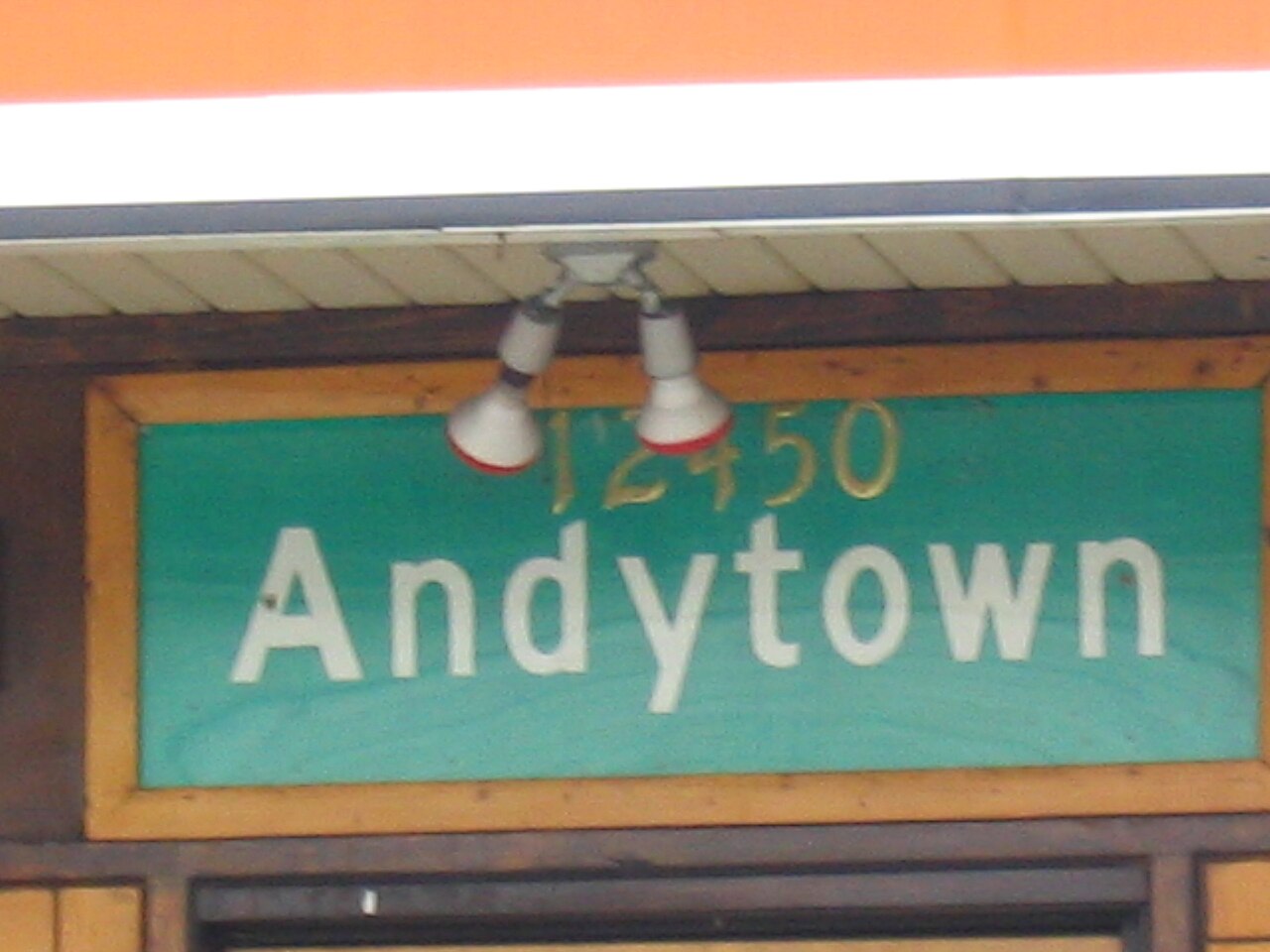
The night air at the western edge of Broward County smelled of diesel exhaust, crushed limestone, and damp sawgrass. Standing near the intersection where Interstate 75 bends into Alligator Alley, Monty Tiberius Beauregard-Hayes looked out across the dark perimeter of the Everglades. Beneath the concrete overpasses lay the forgotten footprint of Andytown, the iconic roadside pit stop submerged and demolished decades ago during the construction of the highway expansion.
Monty adjusted the dials on his biological scanner, his eyes locked on a flickering amber glow through his Aetheric Resonance Goggles. “Silas, look at the thermal baseline near the old canal bank. The heat signatures are completely synthetic. We are looking at fifty-octane gasoline vapors and vintage neon ionization.”
Beside him, Captain Salty Silas held his dip net balanced across his shoulder, his eyes wide as he stared into the dark scrub. “Monty, my uncle used to stop at Andytown for boiled peanuts and ice before heading into the marsh. That whole place was leveled in the late eighties. There shouldn’t be anything out there now except water moccasins and high-speed traffic.”
The Petroleum Mirage
They had driven west from Fort Lauderdale after regional dispatch logged dozens of frantic late-night calls from stranded motorists. Drivers running low on fuel claimed to see a glowing vintage gas station appearing through the mist on the shoulder of the highway, complete with hand-pumped gasoline globes and a mechanical air compressor ringing rhythmically in the dark. Every driver who pulled off to investigate found their vehicle battery completely drained and their fuel lines vapor-locked.
“It is an electromagnetic echo, Silas,” Monty said, tracing a jagged violet wave on his monitor screen. “Andytown was the last outpost of civilization before miles of raw, unpaved marsh. For fifty years, millions of travelers focused their relief and mechanical intent onto this single patch of limestone. When the state flooded the original footprint to build the highway, that concentrated kinetic memory stayed locked in the mud.”
“And the recent highway resurfacing just tapped the wire,” a sharp voice added from behind them.
Penelope Vance walked down the embankment, carrying her portable underground radar unit. She set the frame down on the crushed rock shoulder. “Monty, I ran a ground-penetrating radar pass over the old canal bed. The construction crews exposed a buried cluster of vintage underground storage tanks. They were drained in 1989, but the residual hydrocarbon residue trapped inside the iron casings has begun acting as a massive chemical battery.”
The 1960s Refuel
As Penelope finished speaking, the roar of the modern highway traffic faded into an eerie, muffled stillness. The air temperature plummeted ten degrees, thick with the pungent stench of leaded gasoline and damp asphalt.
Through his goggles, Monty watched a shimmering structure materialize over the grass. A mid-century service station with red enamel trim and glowing glass-topped pumps flickered into reality. The bell inside the station dinged loudly as a phantom air hose pressure line expanded into the humid night air.
The ghost station began drawing current directly from the overhead highway lighting grid, causing the high-pressure sodium streetlamps along I-75 to flicker and die for half a mile in both directions.
“The resonance loop is expanding, Monty,” Penelope warned, her diagnostic tablet flashing bright red. “The static field is trying to draw enough power to light up the entire original neon canopy. If it pulls any more juice from the corridor grid, it will drop the power transformers all the way back to Sunrise.”
Grounding the Wellhead
“We cannot use standard water to quench a petroleum static field, Silas,” Monty commanded, pulling a set of heavy brass grounding stakes and a roll of braided aluminum wire from his pack. “We have to discharge the accumulated hydrocarbon static directly into the deep freshwater table beneath the limestone cap.”
Silas stepped forward, using the long fiberglass handle of his dip net to guide the aluminum leads safely past the flickering neon phantom and down toward the edge of the drainage canal.
Monty drove the first brass stake deep into the wet muck where the original station office once stood, connecting the aluminum braid tightly to the cap.
The moment the final wire clamped down, a brilliant streak of amber static snapped through the cable, sizzling violently as the charge grounded out into the canal water. The glowing glass pump globes shattered into harmless trails of golden light, the smell of leaded fuel vanished instantly, and the hum of modern highway traffic slammed back into their ears.
Penelope checked her diagnostic monitor as the overhead highway lamps flickered back to full power. “The hydrocarbon baseline has completely discharged. The underground tanks are inert.”
Monty gathered his aluminum leads and repacked his kit, casting one last glance across the dark sawgrass where the old crossroads used to be.
“Progress builds right over the top of history, Penelope,” Monty said softly, turning back toward the truck. “But when you bury a place where everyone stopped to refuel, the road remembers the way.”