Monty Tiberius Beauregard-Hayes, ever the strategist, hunched over his typewriter (yes, he still preferred the tactile clickety-clack), crafting his latest piece for the local paper. His goal was delicate: to subtly communicate with the newfound online sensation, the unintentional AI Skunkape of “Swampy Streams,” without exposing its true identity to the wider, potentially exploitative world.
His article, titled “The Importance of Solitude in Our Shared Spaces,” spoke eloquently of the beauty and fragility of the Everglades, the need to respect the privacy of its inhabitants, and the potential harm of intrusion and unwanted attention. He wove in observations that mirrored the content of the “Swampy Streams” channel – mentions of a “large, elusive resident with a penchant for discarded human snacks” and a gentle reminder about the importance of leaving wildlife undisturbed, no matter how captivating their impromptu online presence might be.
Monty even included a cleverly disguised anecdote about a researcher (clearly himself) who once left a durable, waterproof recording device with a particularly shy swamp creature, hoping to learn more about its habits from a respectful distance. The implication was clear: if the Skunk Ape was indeed curious about technology, perhaps a more suitable device could be provided.
Satisfied with his subtly coded message, Monty filed the article with his editor, Shane Hammer (who, after hearing Monty’s increasingly bizarre tales, simply raised a weary eyebrow and said, “Just make sure you spell ‘Everglades’ correctly this time, Monty”).
The next morning, Monty eagerly checked the “Swampy Streams” channel. No new videos. He checked the comments section of his online article. A few locals were musing about Monty’s poetic turn, wondering if he’d finally given up on chasing cryptids. No mention of a large, hairy subscriber.
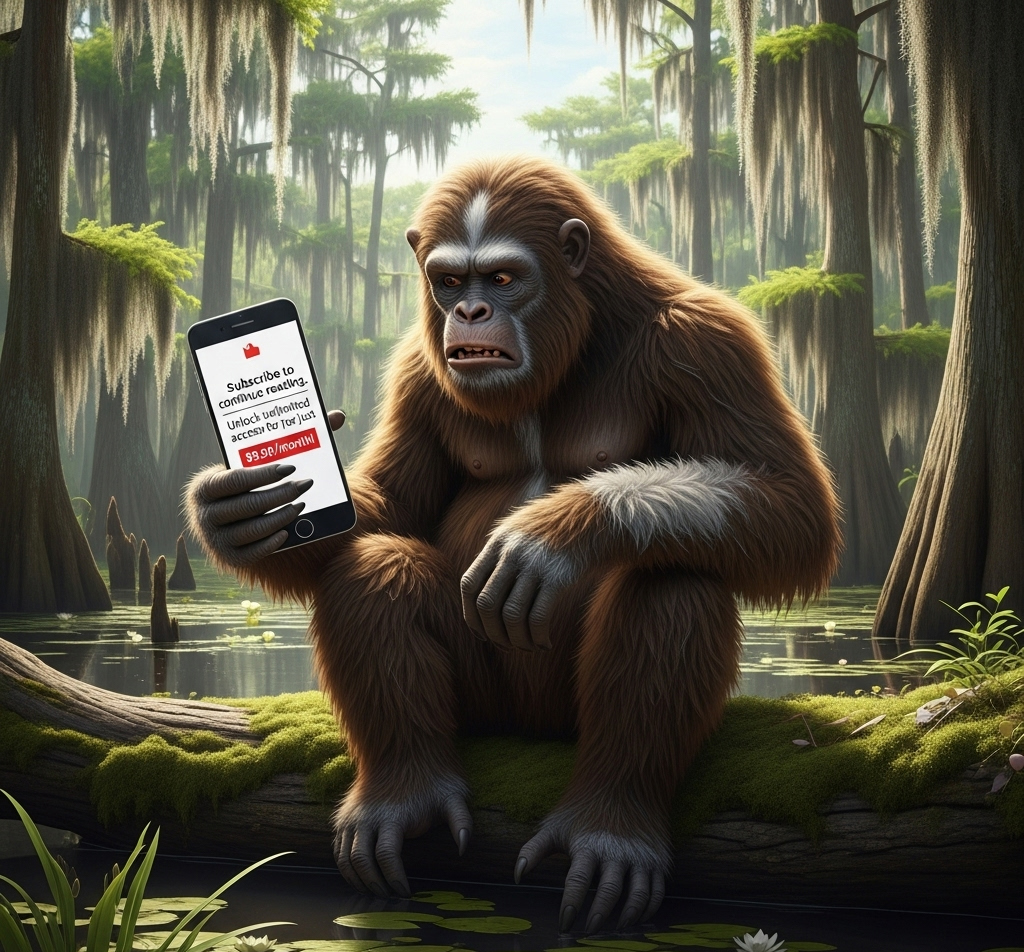
Then, the realization hit Monty with the force of a rogue wave. The local paper, in its infinite wisdom (and its eternal quest for revenue), had recently implemented a paywall for its online content. Monty’s carefully crafted message, his plea for privacy and respectful interaction, was locked behind a digital barrier, accessible only to paying subscribers.
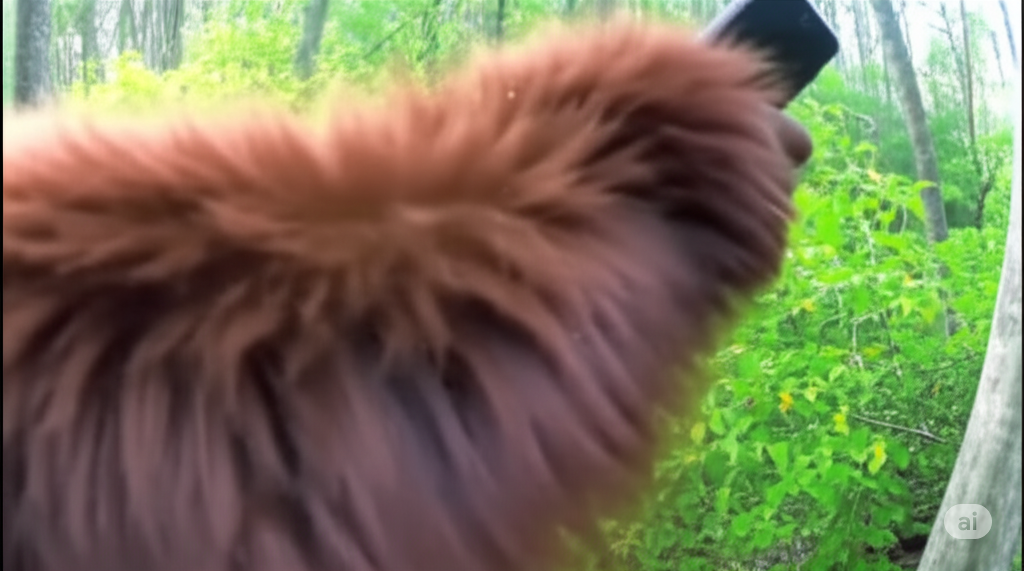
The image of the Skunk Ape, deep in the Everglades, possibly fumbling with its purloined smartphone, trying to decipher the human world through the glowing screen, filled Monty with a comical despair. Even if the creature somehow stumbled upon the link to his article, the chances of it possessing a credit card to unlock the paywall were… infinitesimally small.
He pictured the scene: the Skunk Ape, frustrated by the digital barrier, perhaps attempting to pay by bartering a particularly ripe mango or a half-eaten slice of pizza with its phone screen. The absurdity of it all was almost enough to make Monty laugh.
His attempt at a subtle, technologically mediated communication with the crypto-influencer had been thwarted by the most mundane of modern obstacles: a digital paywall and the Skunk Ape’s presumed lack of online purchasing power.
Now, Monty was back to square one. How could he reach the Skunk Ape without causing a media circus? Perhaps he’d have to go old school, venturing back into the swamp with a peace offering of durable electronics and a laminated instruction manual (written in simple, picture-based language, of course). The age of cryptid outreach, it seemed, was still facing some rather significant logistical challenges.